NotesNovember 2026Planning explained
An outline permission starts two clocks.
The default is three years to apply for approval of the reserved matters, then two years from the last approval to begin. The permission can set different periods, and a court challenge adds time.

An outline planning permission in England carries two deadlines, and they run one after the other. The first is for applying to approve the reserved matters. The second is for beginning the development.
The first clock is for the reserved matters.
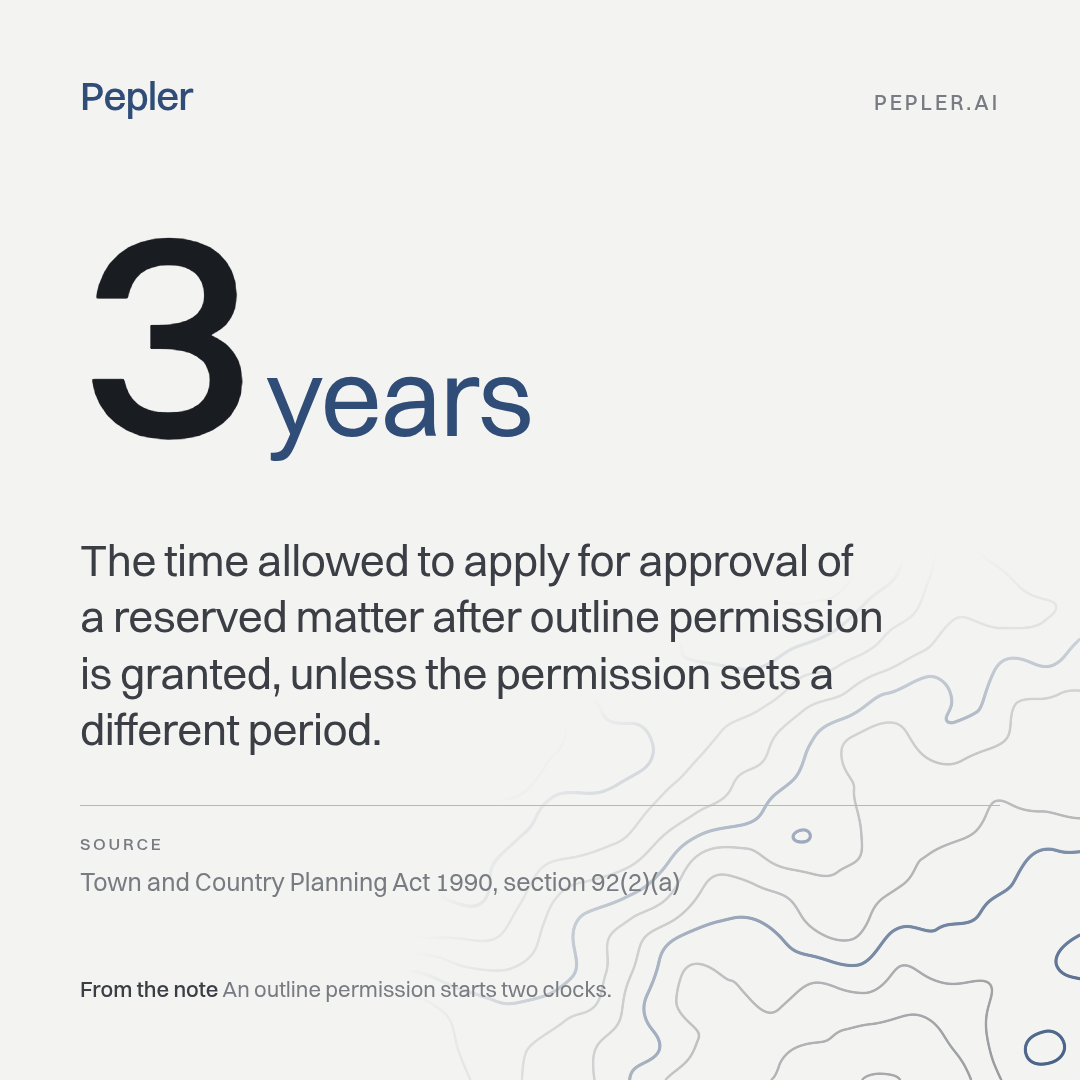
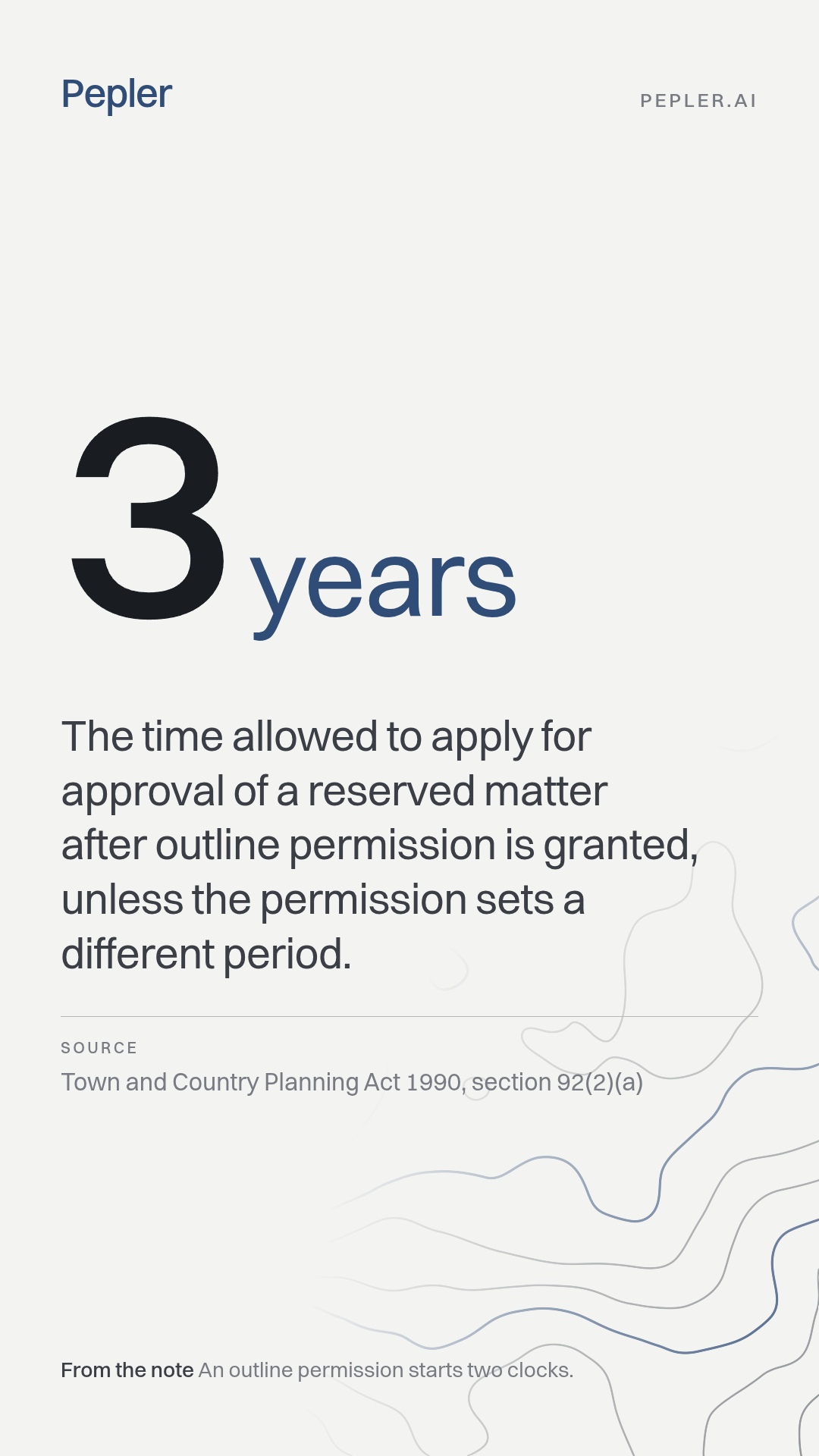
Where outline planning permission is granted for development that includes building or other operations, it is granted subject to a condition on the reserved matters. An application for approval of any reserved matter must be made not later than three years after the date the outline permission was granted.
The time allowed to apply for approval of a reserved matter after outline permission is granted, unless the permission sets a different period.
Source Town and Country Planning Act 1990, section 92(2)(a)
The second clock is for starting work.
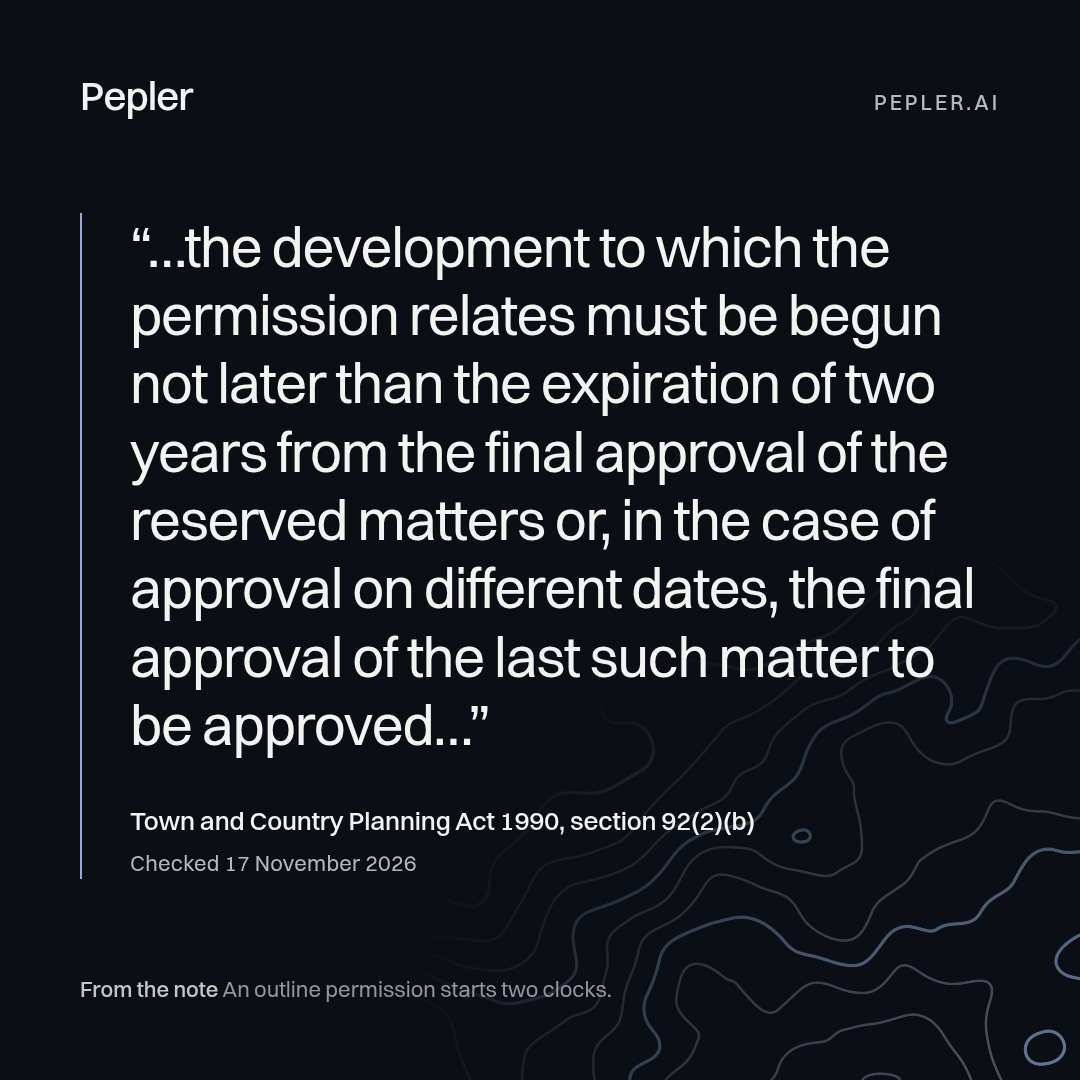
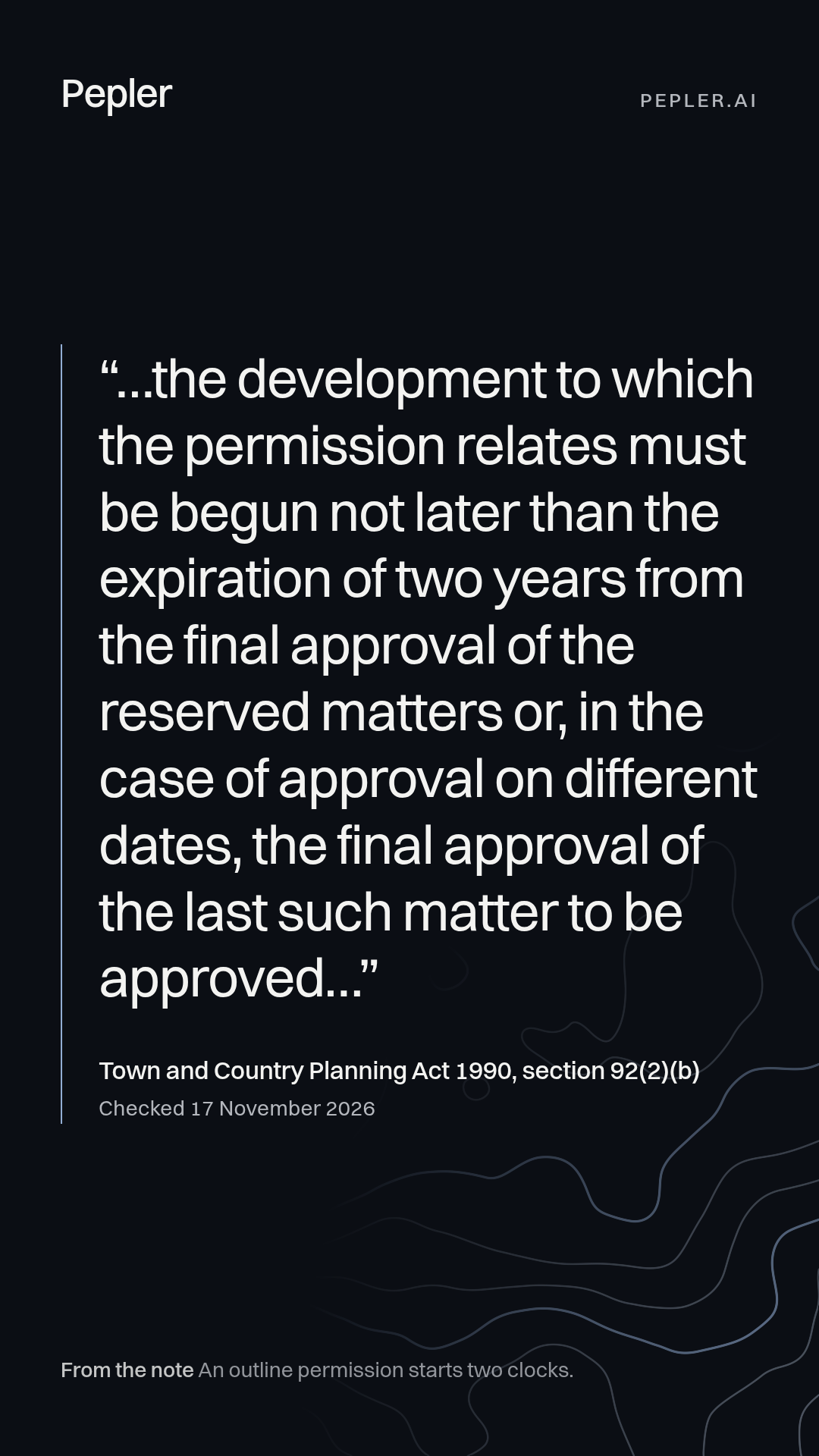
The development must then be begun not later than two years from the final approval of the reserved matters. Where the matters are approved on different dates, the two years run from the final approval of the last matter to be approved.
…the development to which the permission relates must be begun not later than the expiration of two years from the final approval of the reserved matters or, in the case of approval on different dates, the final approval of the last such matter to be approved…
The periods can be changed.
Neither period is fixed. The authority concerned with the terms of the outline permission may substitute other periods, longer or shorter, for the three years and the two. It may also set separate periods for separate parts of the development. In deciding whether to use these powers, it must have regard to the development plan and to any other material considerations.
If an outline permission is granted without these conditions, it is deemed to have been granted subject to them, with exceptions set out in the same section.
A court challenge adds time.
One protection applies when a permission is challenged in court. Where a person is given permission by a court to bring proceedings challenging the validity of a grant of outline permission, or of an approval of reserved matters under one, any reserved matters application period or implementation period that is running at that time is extended by one year.
A further one-year extension applies if a party is given permission to appeal to the Court of Appeal. If permission to appeal to the Supreme Court is granted, the extension is two years.
What to check on your own permission.
The defaults are three years to apply for approval of the reserved matters and two years from the last approval to begin. They are defaults. Read the conditions on your own permission, because the local planning authority may have varied the periods.
Sources: sections 92 and 92A of the Town and Country Planning Act 1990. The passages were quoted by a Pepler answer to this question on 21 August 2026, and every claim in that answer was re-checked against them on 2 September 2026.